
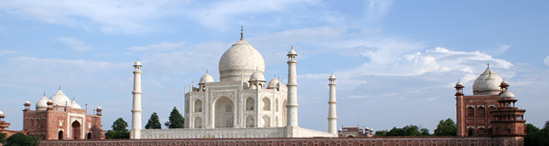
Places to visit in India
  India tour travel packages offered by Pick Your Trip About Us | Faq's | Feedback | Contact Us | Sitemap | Home  
   
Adventure destinations by Pick Your Trip
The mindscapes of adventure-seeking tourists are embedded with passionate longings....just waiting for an encounter with raging and exquisite delights..
more»        
 
Tour of the Month  
Kerala- God’s Own Country   
Kerala God's Own Country
Crave for Sun & Sand!..…come and embrace the golden sands of its immaculate beaches, pep up your spirits under the tropical sun and feel the pulse of its coastal life.......Kerala beach tours offered by Pick Your trip......      more»
 
Incredible India at you Finger Tips
 

All the information you need about India – find it here. Things you need to know about India when you are travelling to the Incredible India.

Climate
Governance
Economy

Climate

India – A climatic potpourri

India's topography varies wildly, so do the climatic conditions. Considered as a hot tropical country by many, a fact that is true for most, of but not all of India. Exceptions include the northern states of Himachal Pradesh and Jammu & Kashmir in the north and Sikkim in the northeastern hills.

Top

Summers

In most of India, summer is hot. It begins in April and continues till the beginning of October. The heat peaks in June with temperatures in the northern plains and the west soaring above 46° C. The monsoons hit the country during this period too, beginning 1st of June when they are supposed to reach the Kerala coast. Moisture laden trade winds sweep the country bringing relief to a parched northern India but devastation in the east where the rivers Brahmaputra and Ganga flood annually. Tamil Nadu in the south receives rainfall between October and December, in the wake of retreating or winter monsoons. India’s extensive coastline lies almost entirely below the Tropic of Cancer. The coast is usually warm and moist, prone to heavy rains in the monsoons and high summer temperatures. The eastern coast is vulnerable to cyclones. Winters here are mild and pleasantly sunny.Hill Stations are the happy peculiarity that came up here when British wives and officers needed to flee the oppressive heat and malaria of the plains. Quaint towns that buzz along "mall roads", tucked away in hills all over India, they are now weekend getaways at the height of summer for families and couples from India’s cities.

Top

Winters

The plains in the north and even the barren countryside of Rajasthan reel under a cold wave every year in December-January. Minimum temperatures could dip below 4° C but maximum temperatures usually do not fall lower than 12° C. In the northern high altitude areas of Himachal Pradesh, Jammu & Kashmir, Sikkim, and parts of Uttar Pradesh, it snows through the winter and even summer months are only mildly warm.The east receives rain from April to August. September to November is relatively dry and the region only has sporadic showers. There are winter rains in December and January. This abates for two months and then it’s time for the monsoon season yet again. The central plateau has similar climate to the north but the mercury does not dip as low in winter. It rains from mid-June to September.

Top

Governance

India is a federal republic with a very strong centre. The world’s largest democracy, it has universal adult suffrage above 18 years. General elections are scheduled every 5 years when the entire country participates in electing members to the Lower House of Parliament called the Lok Sabha. Members to the upper house are elected indirectly. The head of state is the President. The head of government is the Prime Minister. After almost 50 years of governance by a single dominant political party, the Congress, an era of coalition politics seems to have begun. Regional parties are gaining prominence and have increasing clout at the central level. They form a large part of the current ruling coalition where the Bharatiya Janata Party is the largest group.

Top

Economy

Though the constitution proclaims India to be a socialist country, it is in truth a mixed economy with a strong and influential private sector. Public sector undertakings controlled by the state are involved in many industries though the need for disinvestment is being increasingly felt. India has a planned economy. It is largely an agrarian economy. Rice, wheat, oilseed, cotton, jute, tea, coffee, rubber, sugarcane and potatoes are the bulk of the produce. Livestock include cattle, water buffalo, sheep, goats and poultry. Coastal communities and those who live on riverbanks are often dependent on fishing for livelihood.The major foreign exchange earner for India is textile, followed by Information Technology. With Indian IT professionals making it big in the United States and Indian IT companies proving to be among the best in the crop, there is new international interest in Indian professionals. Precious and semi-precious stones, leather products, engineering goods and chemicals are also exported.Major trading partners: US, UK, Germany, Hong Kong, Japan and the UAE.
Major industries: steel, chemicals, food processing, steel, transportation equipment, cement, mining, petroleum and machinery.
GDP: $1.805 trillion (purchasing power parity)
Per Capita income: $1800 (purchasing power parity)
Over 35% of the population lives below the poverty line.

Back to Top

Next

Hot Tour
Golden Triangle
Golden Triangle
Royal India Tour
Royal India Tour
India Group Tour
India Group Tour
Pug Mark Tour
Pug Mark Tour
View all Tours
Have our rep get
back   to you in 24 hrs.
Name
E-mail/URL
Phone
Country
Pick Your Trip
  
 India Guide
 Air Booking
 Car Booking
 Rail Booking
 Ground Transportation
 Conferences/Meetings
 Inventive Incentives
 Spiritual India
 Thrill Zone
 Wedding Planner
About Us | Photogallery | Faq's | Contact Us | Home
Copyright 2003 Pick Your Trip offers - Trip tour travel to India. All rights reserved.
Disclaimer | Privacy Policy | Terms & condition | Substitution Policy | Resources